My work focuses on comparative politics, mainly with two substantive interests: 1) the study of environmental politics, especially in low-income countries, and 2) the study of political representation, focusing on the absence of women and youth in political institutions, as well as opinion and behavior.
Within the theme of environmental politics, I examine a host of issues, including quality of regulations and resource problems (e.g. poaching, deforestation, overfishing). I have experience of field research in South Africa and neighboring countries. My PhD dissertation focused on corruption and studied local bribery among officials in resource governance. I am broadly interested in understanding the politics of protected nature reserves. Example of recent work focuses on the ethnic politics of nature protection in Africa (see article in the Journal of Politics). Related, I am interested in support and opposition to the rapid expansion of nature protection, in line with the agreement to protect 30% of the globe by 2030 (see a recent article on this in PNAS).
In ongoing studies, I examine how environmental shocks affect public opinion and political behavior. In a larger project funded by the ERC I focus on a range of related issues, including the impact from natural disasters and shocks on political outcomes, broadly defined.
Within the theme of political representation, I study a number of knowledge gaps broadly related to a) gender and politics and b) youth representation, briefly described below.
In work on gender and politics, I have developed the insights on how to measure and understand processes around women’s political presence and rights across the world. Together with colleagues in the V-Dem project, I launched the ‘Women’s Political Empowerment Index’, a dataset free to download (see Sundström et al. 2017). For an example of work on public support for female leaders across Africa, see article in Public Opinion Quarterly. My interest on gender and politics has lead me to recently study women’s presence in subnational institutions in African countries.
My work on youth representation is part of a broader attempt, largely together with Daniel Stockemer, to build an agenda on this under-researched topic. This includes theorizing about why young adults’ absence in politics is a democratic deficit (see our open access book Youth without Representation), to examine this problem empirically from different angles (see e.g. a piece on the U.S. House of Representatives), making legislator age data available for others (see warpdataset.com) and to gather a community actors interested in this problem. We also have a review article on this theme. In 2023 we received the First Time Voter Award for our work on youth representation, a recognition from the International Centre for Parliamentary Studies.
For a full list of publications, see CV or visit my Google Scholar profile.
Selection of recent papers
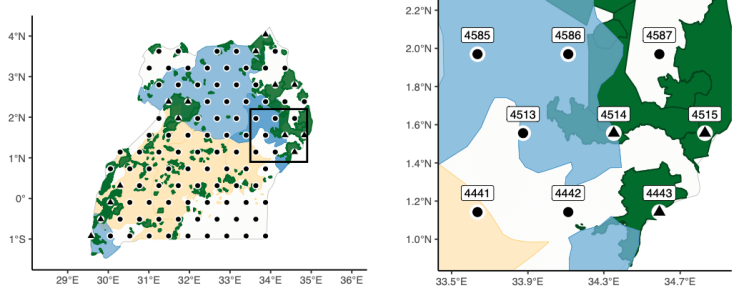
Dawson, S., F. Haass, C. Müller-Crepon, A. Sundström (2026) The Ethnic Politics of Nature Protection in Africa the Journal of Politics.
Michaelsen, P., A. Sundström and S. C. Jagers (2025) Mass support for conserving 30% of the Earth by 2030: Experimental evidence from five continents PNAS, Proceedings of the National Academy of Sciences.
Sundström, A., N. Harring, S. Jagers and M. Povitkina (2026) The Impact of Corruption on Climate Change Mitigation: A Review Article Environmental Politics.
Yehle, L., A. Sundström, P. Michaelsen and S. Jagers (2026) “Public support for military conservation: Understanding public opinion to the ‘war on poachers’ in three countries”, World Development, conditionally accepted.
Selection of work in progress:
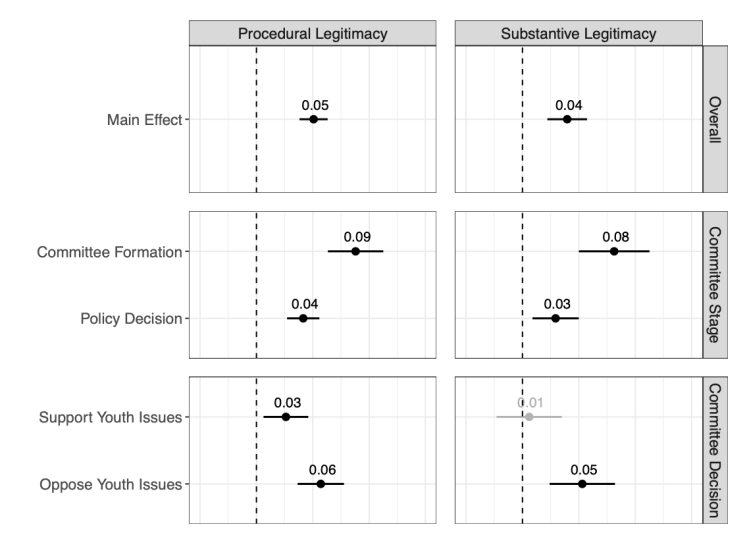
Sundström, A., C. McClean, D. Stockemer “Youth Representation and Democratic Legitimacy”, invited for revise and resubmit at British Journal of Political Science.
“Public Revenues and Accountability: Testing the Ownership Mechanism” with M. Alvarado, T. Ahmed and S. Jagers.
Sundström, A., S. Dawson, S. Pailler. “Protected Areas and Spillovers on Corruption” QoG Working Paper 2024:16.
Sundström, A. Thirsting for New Leaders? Droughts and Demand for Women Politicians QoG Working Paper 2026:2.
Elia, E., A. Sundström, S. Dawson. Climate Shocks, Gender and Incumbency Punishment. QoG Working Paper 2025:6.
Sundström, A. “Liberties Scared Away: Support for Authoritarian Rule and Rights Curtailment Under Security Threat.”
 Aksel Sundström